



The Good of Cities for Intellectual Communities


An Address by Dr. Zachary Howard to The Ciceronian Society, March 15, 2025, James Madison University, Harrisonburg, VA.


Defining the City

The theme of cities within the biblical narrative and throughout human history underscores the basic reality that cities intensify, both for good and for evil. Cities are humanity en mass, and thus they take an individual human’s capacity to do good or evil and intensify it.[1] But what distinguishes the city from other parts of the country? Many may assume that population size sets cities apart from the suburbs or small towns. But in fact, it’s not population size but population density. The suburbs surrounding Minneapolis have a combined total population that is much higher, but Minneapolis is much denser—the number of people per square acre is far greater. Density characterizes cities and such density amplifies human good and evil.

Beyond density, though, cities also are defined by their diversity. There is, of course, diversity in economic and social status, from the wealthy and elite to the poor and low-status folks sharing the same sidewalks. And of course, the many opportunities of a city attract a wide range of religious, ethnic, and cultural diversity as often seen in the dramatic variety of food and restaurants available.[2] But there is another kind of diversity less often appreciated; and that is the diversity of land use in a city.[3] A city brings onto the same block and sometimes even into the same building both residential and commercial, legal and economic ventures. Putting these together, then, I define cities as intensifiers for good and evil characterized by density and diversity.

Since cities are such intensifiers for both good and evil, they are both better and worse as places for building an intellectual community. They are better insofar as they amplify opportunities for learning and growth by offering diverse experiences, exposing you to a wide range of cultures, integrating commerce, academics and the arts, political and legal pursuits through proximate, mixed land use. They are worse insofar as they often interrupt and distract intellectual pursuits, sometimes hindering sustained contemplation. There is a tension, then, for an intellectual community pursuing sustained contemplation in a city. And it’s one we are familiar with at Bethlehem.
Describing Bethlehem

That brings me to my second point, which is to briefly describe Bethlehem College and Seminary’s history and current place in the city of Minneapolis.

The story of the school really begins in 1871 when First Baptist Church of Minneapolis planted a new Swedish-speaking church that eventually became Bethlehem Baptist Church in the 1920s when they transitioned to English as the dominant language. That church first thrived and then dwindled to a small inner-city congregation by the late 1970s before John Piper became the pastor in 1980. During his 33-year tenure as Pastor for Preaching and Vision, John Piper and fellow pastor Tom Steller began a pastoral training program that eventually became Bethlehem College and Seminary in 2009. From its inception, the school not only operates on the campus of Bethlehem Baptist Church but also shares a common confession with a movement of churches that all subscribe to the Bethlehem Elder Affirmation of Faith.[4] The school views the church, and this movement of churches, as an essential tether in its confessional identity.

The location of the church and school has also significantly shaped its identity, which I will now describe in my final point on defending the good of cities for intellectual communities.

I define cities as intensifiers for good and evil characterized by density and diversity.

Defending the Good of Cities

The future of many American city centers and urban neighborhoods is more uncertain than it has been in the last thirty years. So how do the density and diversity serve as goods for shaping an intellectual community? Rather than describe this in the abstract, I want to defend the good of the city for my particular intellectual community as an illustration for the wider good of cities for any intellectual community.[5] Because cities are intensifiers for good and evil characterized by density and diversity, I want to name two goods that cities offer for building intellectual communities:

First: Cities Challenge Intellectual Complacency

Cities force us to grapple with fallen humanity in ways we might not otherwise. The diversity of ideas certainly makes it harder to retain unexamined assumptions about the world. Cities also challenge the intellectual virtues by confronting students and faculty alike with the need for moral virtues. You step out onto the streets of Minneapolis around Bethlehem and are frequently confronted with the problems of humanity intensified. A cloistered intellectual life is far less possible in a city center.

The college can be an intellectual oasis in a city like Minneapolis while also adding the value of keeping the intellectual life grounded in the moral life through confronting real problems like finding an apartment, learning street smarts and safety, and ministering to the poor.

These goods are trade-offs with other goods. A cloistered intellectual life makes deep, sustained contemplation much more likely because it occurs without the distractions that the city also offers.

Second: Cities are Centers for Spreading

In his book Center Church, Tim Keller describes how planting Redeemer Presbyterian Church in the middle of New York City made it possible to reach the suburbs outside the city. He says: “You can’t reach the city from the suburbs, but you can reach the suburbs from the city. Cities are like a giant heart—drawing people in and then sending them out. Students come to cities to attend school, and then they graduate and move out. Singles meet in the city, get married, and move out to the suburbs when children are born. Immigrants come to the city and live in ethnic enclaves, but as they amass assets and become more established in their new country, they move outward to gain additional space for their growing families. In each case, the movement is from the center outward.”[6] Because cities naturally draw people in and then send them back out the best way to develop an intellectual community is to be prepared to spread.

Bethlehem’s very mission statement accents spreading: both church and school exist to spread a passion for the supremacy of God in all things for the joy of all peoples through Jesus Christ. The school does that by training pastors in the seminary and future church members and leaders in the college. A growing number of graduates from the seminary have planted churches in the Twin Cities, its surrounding suburbs, and beyond, with many Bethlehem college graduates becoming members of those same churches. And this has happened on a smaller scale across the US and internationally as well. Spreading has characterized Bethlehem as a community, remarkably facilitated by its place in the center of Minneapolis.

Yet, there is a reasonable objection to the “good of spreading,” though: cities are too transient for long-lasting intellectual community. People come and go quickly in cities; few remain for life. And therefore, intellectual communities are harder to sustain in the “hurly burly”[7] of city transience. It’s hard to maintain the momentum of the shared enterprise of an intellectual community in a specific place when its members keep leaving, especially when you deeply value the good of in-person community like at Bethlehem.

This is an important objection that I believe the localism advocated in both Jane Jacobs’ on American Cities and Wendell Berry’s on “the agrarian mind” address well.[8] That’s a topic for Q&A. For now, I will only offer an initial answer by suggesting that overcoming this problem requires first that the community call a few people to stay rather than spread. While I grew up, my dad served as an elder at our church plant and he frequently used this catch phrase to call people to stay in the San Francisco East Bay: “Live. Work. Church. Berkeley.” He was calling people to consider staying long-term in the city—to live, work, and do church life in one integrated place. The strength of spreading that a city offers must be balanced by the call for some to stay and sustain the capacity to send. Bethlehem, both church and school, is itself in a season of re-visioning how it calls some of its people to stay even as it prepares many to go.

Conclusion

For each of the intellectual communities I mentioned at the beginning—Benedictine monks, Enlightenment intellectuals, and this society here—the places where they pursue the life of the mind forms the character and quality of their community. I’ve argued that the city offers goods for forming a healthy intellectual community which Christians should recognize and leverage. Bethlehem is attempting to do that for the long-term in Minneapolis as we seek to build and sustain a city campus that leverages the goods of the city while limiting its drawbacks. And in closing I would just suggest that the growing challenges on the horizon for many American cities presents an important opportunity for Christians in particular to consider how best to develop and sustain intellectual communities that can serve those cities and spread from them.

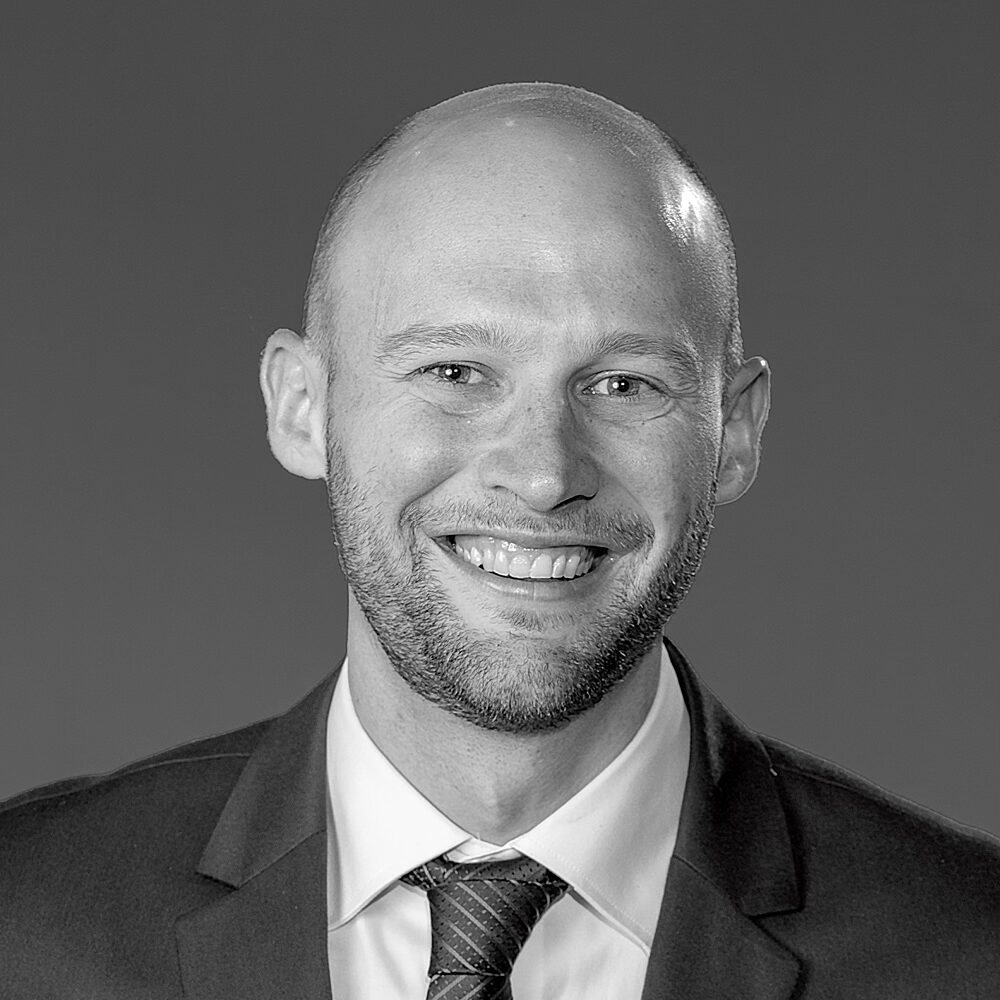
By Zach Howard, Academic Dean
Assistant Professor of Theology and Humanities
The Ciceronian Society exists to equip and encourage Christian scholars to serve the church as a center of cultural and civic renewal.


[1] Timothy Keller, Center Church: Doing Balanced, Gospel-Centered Ministry in Your City, (Grand Rapids, MI: Zondervan, 2012), 159.

[2] Timothy Keller, Center Church: Doing Balanced, Gospel-Centered Ministry in Your City (Grand Rapids, MI: Zondervan, 2012), 135. Cf. Zach Howard, “In Minneapolis for Good,” Bethlehem College and Seminary (blog), August 21, 2020,  https://bcsmn.edu/minneapolis/.

[3] Christian sociologist John A. Mayer has published 17 editions of the “CityView Report” detailing the diversity of the greater Twin Cities metro area: https://cityvisiontc.org/cityview-report. Dr. Mayer regularly leads “city vision tours” in the Phillips neighborhood immediately south of Bethlehem in Minneapolis, which he describes as one of the most religiously and linguistically diverse neighborhoods in the United States.

[4] See Jane Jacobs’ case for mixed use land that kept “eyes on the street” all the time in her classic 1961 work The Death and Life of Great American Cities, Reissue edition (New York: Vintage, 1992). Cf. My 2010 college honors thesis at Hillsdale College—“New Urbanism: The Confluence of Person, Place, and Purpose”—which critiqued the New Urbanism Movement’s concept of community despite its embrace of Jacobs’ advocacy for mixed use land in cities.

[5] Treasuring Christ Together is the name of the church-planting network that originated out of Bethlehem Baptist Church and those churches are mainly led by Bethlehem Seminary graduates. See https://tctnetwork.org/home. For a longer look into the legacy of church planting from Bethlehem Baptist Church, see https://bethlehem.church/churchplantinghistory/.

[6] As I defend the good of cities for shaping intellectual communities, please do not misunderstand my affirmation of cities as a denigration of everywhere else. I grew up as a city boy who regularly went to the small farming community in the Sacramento Delta for family gatherings and, for a couple summers, to help my grandfather farm. And although I currently live right in the center of a city, we regularly take our kids to our lake home in a small town outside the city. We want them to be conversant in both urban and rural culture. So I personally have experienced the formative goods places outside cities and their cultures offer.

[7] Timothy Keller, Center Church: Doing Balanced, Gospel-Centered Ministry in Your City, (Grand Rapids, MI: Zondervan, 2012), 159.

[8] This phrase comes from Robert Fagle’s masterful translation of Homer’s and Virgil’s epic poems where he uses it several times.

[9] I first read both Jacobs and Berry on this in college but it was not until Keller put these two thinkers together that as Keller, Center Church, 170–71.