




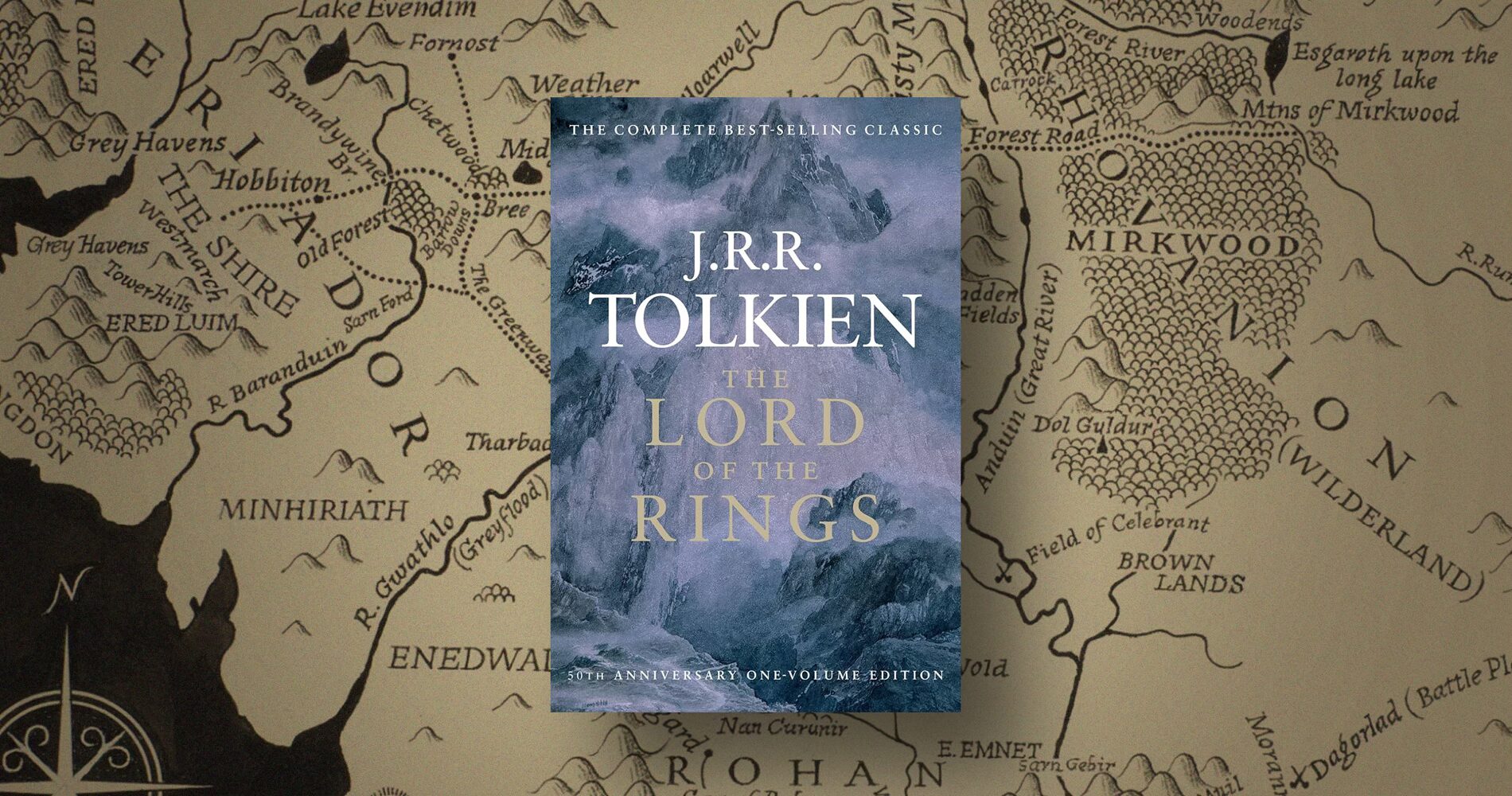
Imagine hearing half the alphabet every time someone said your name. For J.R.R. Tolkien, or his given name John Ronald Reuel Tolkien, his name was quite a mouthful, so he went by John or Ronald with his family, and Tollers or JRRT (pronounced like dirt) with his friends. But for all of you and for myself, his name is not just a mouthful of letters. Like his initials, his name itself points to something much longer and more complex than was initially thought. Like his initials, his name represents something unique.
Tolkien was born in January of 1892 and died in 1973. He married his wife, Edith, shortly before he went off to fight in WWI, where he eventually became too sick to remain on the battlefield. After the war, he spent most of his remaining life as an English professor in Oxford. It was during these years that he undertook translation projects like Beowulf, reviving the monster tale from its academic grave, and Sir Gawain and the Green Knight, an Arthurian story about the dangers of lust. But as fascinating as those topics are, they’re not the reason he’s renowned.
Tolkien wrote one of the greatest masterpieces of the 20th century: The Lord of the Rings. A thrilling and epic tale full of mystery and mythology, The Lord of the Rings enthralled the imaginations of the world after The Return of the King was published in 1955. Elves, dwarves, men, hobbits, and wizards embarked to combat a Dark Lord and his orc horde. But that was not his only big seller. The Hobbit was his first masterpiece, a children’s book published in 1937, in which a very modest and unassuming bachelor hobbit (mostly) decides to become a burglar for a merry dwarf band. In addition to these major bestsellers, Tolkien also penned numerous poems and short stories like Farmer Giles of Ham, a story about a gruff farmer frightening a dragon with his blunderbuss, or Roverandom, a story about an adventurous shrinking, swimming, and flying dog. Tolkien’s son, Christopher Tolkien, edited and published his unfinished works after his death, of which the foremost was the Silmarillion, a monstrous history of Tolkien’s fictional world. In this book, Tolkien wrote his own creation story and myths of Beleriand, a wild western land that sunk into the sea. I have a friend who likes to say that Tolkien would have been the perfect elf, since then he would have had time to write to his heart’s content and finish his fictional world.
And that is what transformed Tolkien from a good author to a legend: his world-building. Unlike any before himself, Tolkien concocted a world full of strange peoples and places, with dragons and balrogs sprinkled on top. He made the trees to talk, and the dead to die. But here’s something I find impressive: after his success with The Hobbit, Tolkien was not merely interested in writing another good story. He challenged himself to write an anthology, a history, a behemoth. Even as he wrote The Lord of the Rings, Tolkien drafted The Silmarillion and hoped to publish them together in one volume! (This boggles my mind.) Thankfully, his publishers had a little more common sense and made him publish things separately.
In my own life, Tolkien opened my eyes to see what good stories are made of. I remember opening The Silmarillion for the first time, reading the first chapter, and thinking, “what in the world?” All I got was something about a few deities and a song. It made no sense whatsoever. So, I tackled it again a year later. That time, I made it all the way through, but it was still extremely confusing. Only after the third read-through did I actually understand what was going on. As I grew and understood how he had constructed Middle-earth, I started to realize why he’s so beloved. The richness of his story invigorated my mind unlike almost all of the dime-a-dozen novels I read when I was younger. Here was a mature and potent draught that both satisfied and awakened my hunger for literature. Here’s an analogy: Reading Tolkien is like hiking to a waterfall. You can see the spray and color from a distance, but you have to get closer to really experience the sound of the falls. There’s a river that needs to be crossed, rocks traversed, and even a small tunnel to be squeezed through. But once you’ve emerged into daylight, you’re surrounded by the gentle mist of the deluge. Like Faramir and his men, you’ve entered the secret halls of Henneth Annun and found what only the few can find.
And that is my hope for all of you. I want you to feel the deep satisfaction of his genius and yet have a hunger for good stories. After all, the best stories are ones that point us back to the truest story of the gospel, which Tolkien accomplishes. So next time you think to yourself, “what does J.R.R. stand for again?” remember: it’s bigger than you could ever imagine.