



“Great is the Lord, and greatly to be praised, and his greatness is unsearchable.” (Ps. 145:3)
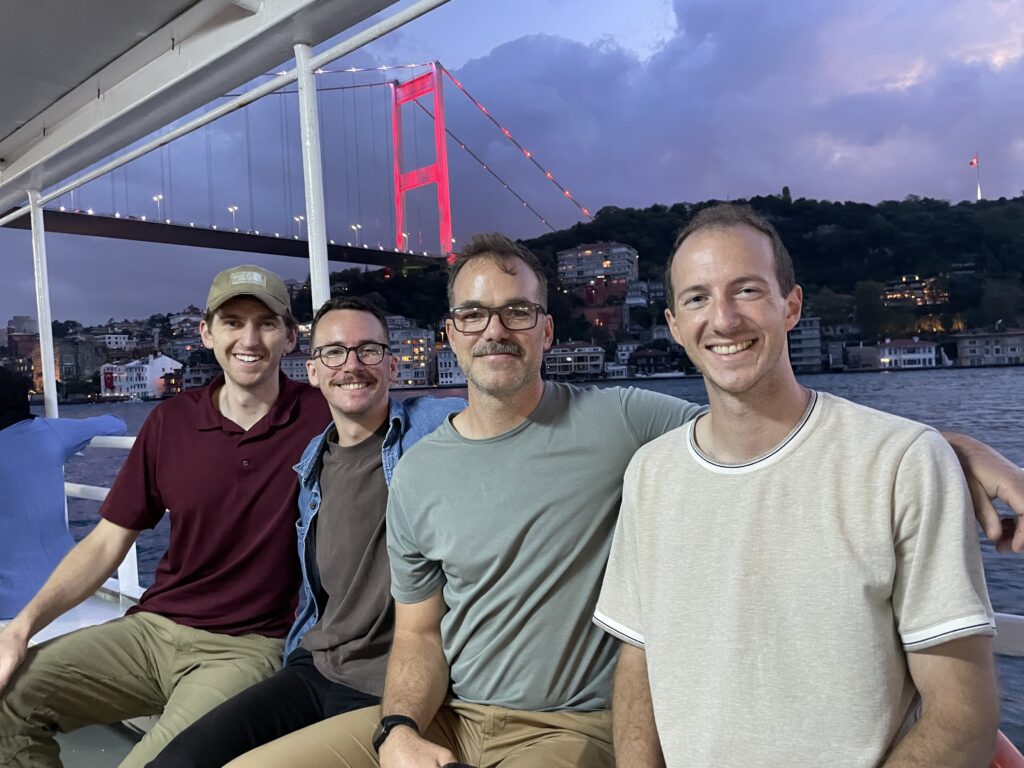
While on my cross-cultural trip in August, I found myself worshipping on the Lord’s Day in a small chapel within the Dutch Consulate in Istanbul, Turkey. Built in 1711, the historic “Dutch Chapel” has been the meeting place of the same congregation since 1857, the oldest Protestant church in Turkey today. Etched upon the old brick wall, beneath a simple wooden cross, the Dutch words of Psalm 145:3 shone in gold letters above the pulpit: “De HEERE is groot en zeer te prijzen.” “Great is the LORD, and greatly to be praised.”
Not long into the worship service, tears began welling in my eyes and rolling down my cheeks. The emotion wasn’t merely due to the exhaustion of jet lag (tired though I was!). Rather, the source of my unspeakable joy on that Lord’s Day was the greatness and the beauty on display—for any who had eyes to see it—in that humble and peculiar gathering of saints with whom I worshipped.
Just yards away from one of the busiest streets in downtown Istanbul, within the walls of that small Dutch Chapel, something otherworldly was taking place. In the midst of a sea of fifteen million Muslims going about their Sunday, a very particular glory was shining. An Indonesian aerospace engineer strummed faithfully on his guitar, leading us in worship to songs like “Behold Our God.” A brother from the U.S. South (as betrayed by his accent) led us in a time of confession and assurance of pardon. A Kenyan sister encouraged our hearts and prayed for the nations through her intercessory prayer. And as the Word was faithfully preached, I sat nearby an Iranian brother who had been freed from addiction and now worshipped the same risen Jesus Christ whom I did.
In those old pews, a small foretaste of Revelation 5:9–10 was on full and glorious display. Nothing else in all the world could have gathered such a disparate group into such a place than the one reality which had: that Jesus Christ was slain, and by his blood he “ransomed people for God from every tribe and language and people and nation.” As I looked around at these brothers and sisters from different nations and backgrounds—my brothers and sisters—the unique beauty of our diversely unified worship magnified the greatness of Christ in a particular way. Our united worship was living and embodied proof of the statement on the wall above us. Jesus Christ is worthy, and not just of the glory and praise of some peoples, but of the particular glory that comes to him when “every tribe and language and people and nation” gather to praise Him. “Great is the LORD, and greatly to be praised.”
Not many in this world took notice of that small, humble worship service in the Dutch Consulate in Istanbul that Sunday morning in August. But God did. And the rulers and authorities in the heavenly places took notice of “the manifold wisdom of God” (Eph 3:10). And I was deeply moved.
That night, Dr. Compton, Brandon Andrews, and I shared dinner with two families that have labored for the gospel in Istanbul for the last sixteen years. We heard about the joys and the hardships of such a life. We prayed and sang Turkish worship songs together. Later that week, Dr. Compton taught a biblical theology course at Safir, a training center in Western Asia which exists to equip faithful workers to joyfully establish churches in the places with the least access to the gospel. Though these fellow workers in Christ come from various places and backgrounds, they have each left houses and brothers and sisters and father and mother and children and lands because of a single glorious vision. They each share that one ultimate and life-altering motive for taking the gospel to the hardest places—in Dr. Compton’s words: God’s mission. God is after his own glory, that particular glory which will come to him from a perfect world ruled over and filled with people from every place who know him and love him and with whom he can dwell forever.
As one of my pastors said this week, the gospel has crossed many borders to reach us here in 21st century America. The good news which began to spread when the angels told those first women, “He is not here, for he has risen!” (Matt 28:6) crossed oceans and empires and languages and centuries before I first heard and believed it in a Sunday School classroom twenty-five years ago. And how I thank God that it did! For generation after generation, faithful men entrusted to faithful men this precious news, frontier missionaries breached the most difficult of Hades’ defenses at great personal expense, and mothers and fathers raised their children in the nurture and admonition of the Lord. I am the beneficiary of these countless men and women who labored for the gospel through the centuries, and with whom I will live forever (and thank!) one day.
Yet even now, the gospel goes forth, and must go further still. The mission of God moves inexorably on. Jesus Christ is building his church, and the gates of hell shall not withstand it. God will have the end for which he created the world. There’s no doubt about that. The question is really, “What will I do with this life God has given me to take part in it?”
“After this I looked, and behold, a great multitude that no one could number, from every nation, from all tribes and peoples and languages, standing before the throne and before the Lamb, clothed in white robes, with palm branches in their hands, and crying out with a loud voice, ‘Salvation belongs to our God who sits on the throne, and to the Lamb!’” (Rev 7:9–10)
Nate Cordano
Seminarian