



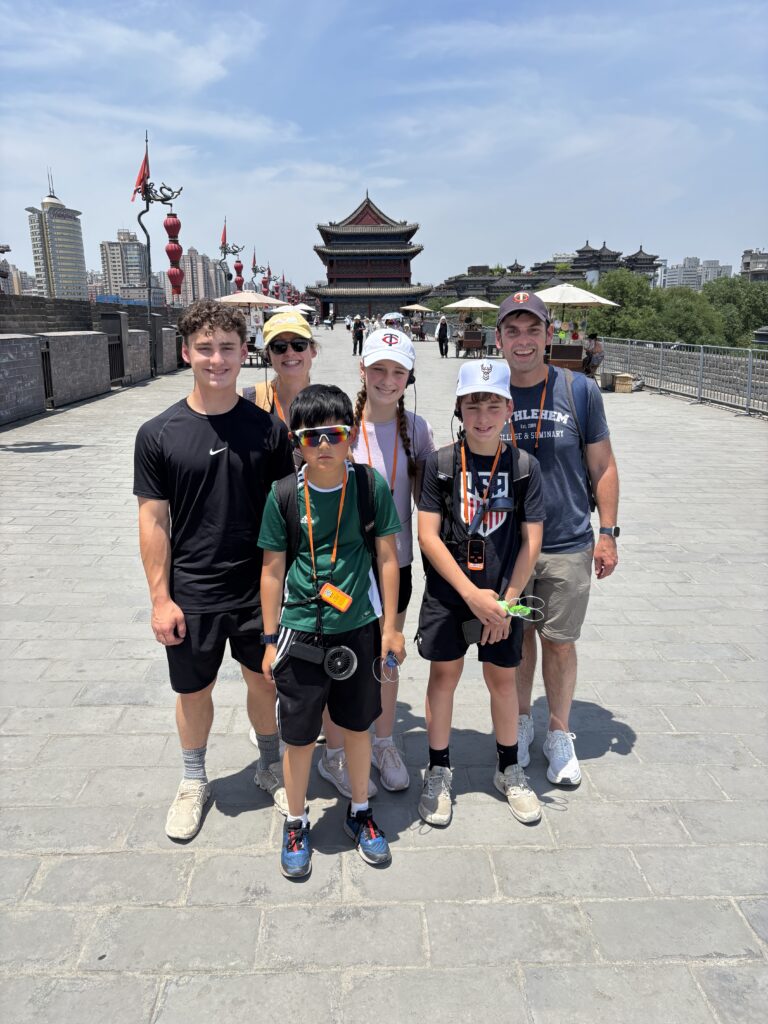
My family recently returned from a memorable trip to China. We traveled to three major cities—Beijing, Xi’an, and Shanghai—cities which our guides said represented China’s present, past, and future, respectively. We toured ancient wonders like the Great Wall, the Forbidden City, and the Terra-cotta Warriors. We watched golden snub-nosed monkeys playing and giant pandas chowing down on bamboo—including Qizai, the only brown panda living in captivity. We zoomed up to the observation deck of the Oriental Pearl Tower in Shanghai and strolled The Bund along the Huangpu River. We enjoyed lavish meals including Peking duck, Biangbiang noodles, pork belly, even chicken feet. Our family visited the institution where my adopted son lived for three years. And we grew in our appreciation of the church’s history, challenges, and opportunities in China.
In her recent article “The Church in China: Learning to Fly in a Birdcage,” Joann Pittman explains that “the story of the church in China … is more than a story of persecution or a shrinking birdcage. It is a story of faithful living in a hostile environment. The birdcage may be shrinking, but the life of faith inside it is still real, active, and full of witness. God remains faithful!” In another article she highlights the “bamboo resilience” and remarkable innovation of Chinese believers. I saw several examples of this during our two weeks in China.
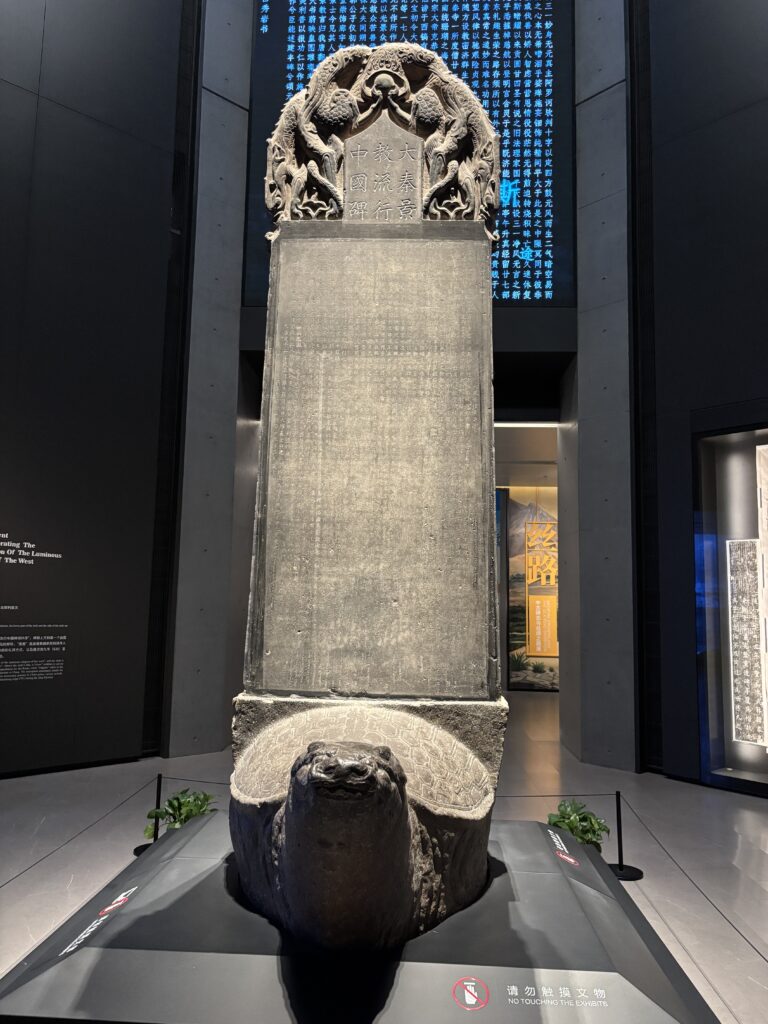
In a quiet museum near the old city wall in Xi’an we saw the Nestorian Stele, a nine-foot-tall limestone block erected in AD 781 during the Tang Dynasty that provides the earliest record of the spread of Christianity in China. The inscription at the top reads, “A Monument Commemorating the Propagation of the Da Qin Luminous Religion in the Middle Kingdom” (as translated by Michael Keevak). The stele summarizes the distinctive theological beliefs of Nestorian Christianity and recounts how a monk brought this Christian faith to China in 635 AD and met with the reigning emperor, who approved his teaching and issued an edict allowing for its propagation. The stele recounts how the Scriptures were translated and churches established when “the pure, bright, illustrious religion was introduced to our Tang dynasty.”
While in China we attended the worship service of a prominent registered church in Beijing, which was founded by Methodist missionaries in 1870. The next Sunday we worshipped with an international church in Shanghai. At the registered church I saw posters detailing official regulations for religious activities and commending patriotic religion and heard announcements about community events promoting the Communist Party, which were obviously in tension with the pastor’s sermon about Jesus sending out the apostles in Matthew 10. At the international church, we were required to present our foreign passports at the door since Chinese nationals are not allowed to attend. We sang familiar praise songs and heard an edifying message in English on the Parable of the Prodigal Son. I also heard stories from friends involved in smaller unregistered house churches that gather in apartments and hotels. They spoke of visits from local police, pastors who have been detained, and moves to new meeting spaces. But we also heard about Chinese believers being discipled, leaders being equipped, and new congregations being established.

Our God is the King of the nations, and we long for his glory to cover the earth as the waters cover the seas. God is at work in China, even in the face of much opposition and pressure. Our recent visit to China encourages me to pray that these fellow believers on the other side of the globe will remain steadfast in adversity and will continue speaking about the hope that they have through Jesus Christ, the savior of the world.
Brian Tabb, Ph.D.
President